TOLL FREE · 1-888-361-0003 Our Customer Support is ready to help!


Format:
Softcover
Product Overview
The 2024 edition of the Code includes the Canadian Electrical Code, Part I, plus several Ontario-specific amendments.
ESA Ontario Electrical Safety Code (OESC), 29th Edition - 2024
Total
$291.00
Compare Products
| Short Description |
The 2024 edition of the Code includes the Canadian Electrical Code, Part I, plus several Ontario-specific amendments. |
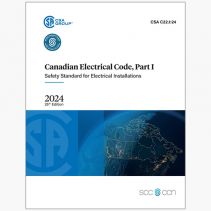
The new edition of CSA C22.1:24 Canadian Electrical Code, Part I, Safety Standard for Electrical Installations is now available!The Canadian Electrical Code, Part I (the Code) establishes guidelines and requirements necessary to reduce risks of electric shock, fires, and other electrical hazards. As electrical technology, materials, and equipment evolve, regular updates help ensure that the Code remains aligned with advancements in the field, allowing electrical professionals to work with cutting-edge tools and technologies safely and efficiently.
|
| Features | N/A | N/A |
| Price |
$291.00
|
As low as
$190.00
|

More About This Product
Description
The 2024 edition of the Code includes the Canadian Electrical Code, Part I, plus several Ontario-specific amendments. This new edition includes changes designed to enhance electrical safety and the public including:
- Enhancing Plan Review requirements to include submission for some electric supply equipment (EVSE) installations, and to include stand-alone electric-power-generating-equipment and systems.
- Revising demand load calculation for single dwellings with EVSE loads.
- Enabling electrification by recognizing other types of energy management systems in addition to electric vehicle energy management system.
- Complete rewrite of the installation requirements of energy storage systems (ESS) at residential occupancies.
- Preventing electrical shock hazards with additional requirements for outdoor receptacles for single dwellings.
- Preventing overloading in the future by requiring labelling of maximum residential load.
- Enhancing bonding requirements for pools and hot tubs to prevent shock hazards
- Permitting insulated conductors within an enclosure when connected to different sources of voltage, with specific conditions.
- Protecting the public with additional GFCI requirements for cords used at midways, carnivals, fairs and festivals.
- Increase in allowable voltages in electric vehicle supply equipment installations.
The 2024 edition of the Code includes the Canadian Electrical Code, Part I, plus several Ontario-specific amendments. This new edition includes changes designed to enhance electrical safety and the public including:
- Enhancing Plan Review requirements to include submission for some electric supply equipment (EVSE) installations, and to include stand-alone electric-power-generating-equipment and systems.
- Revising demand load calculation for single dwellings with EVSE loads.
- Enabling electrification by recognizing other types of energy management systems in addition to electric vehicle energy management system.
- Complete rewrite of the installation requirements of energy storage systems (ESS) at residential occupancies.
- Preventing electrical shock hazards with additional requirements for outdoor receptacles for single dwellings.
- Preventing overloading in the future by requiring labelling of maximum residential load.
- Enhancing bonding requirements for pools and hot tubs to prevent shock hazards
- Permitting insulated conductors within an enclosure when connected to different sources of voltage, with specific conditions.
- Protecting the public with additional GFCI requirements for cords used at midways, carnivals, fairs and festivals.
- Increase in allowable voltages in electric vehicle supply equipment installations.